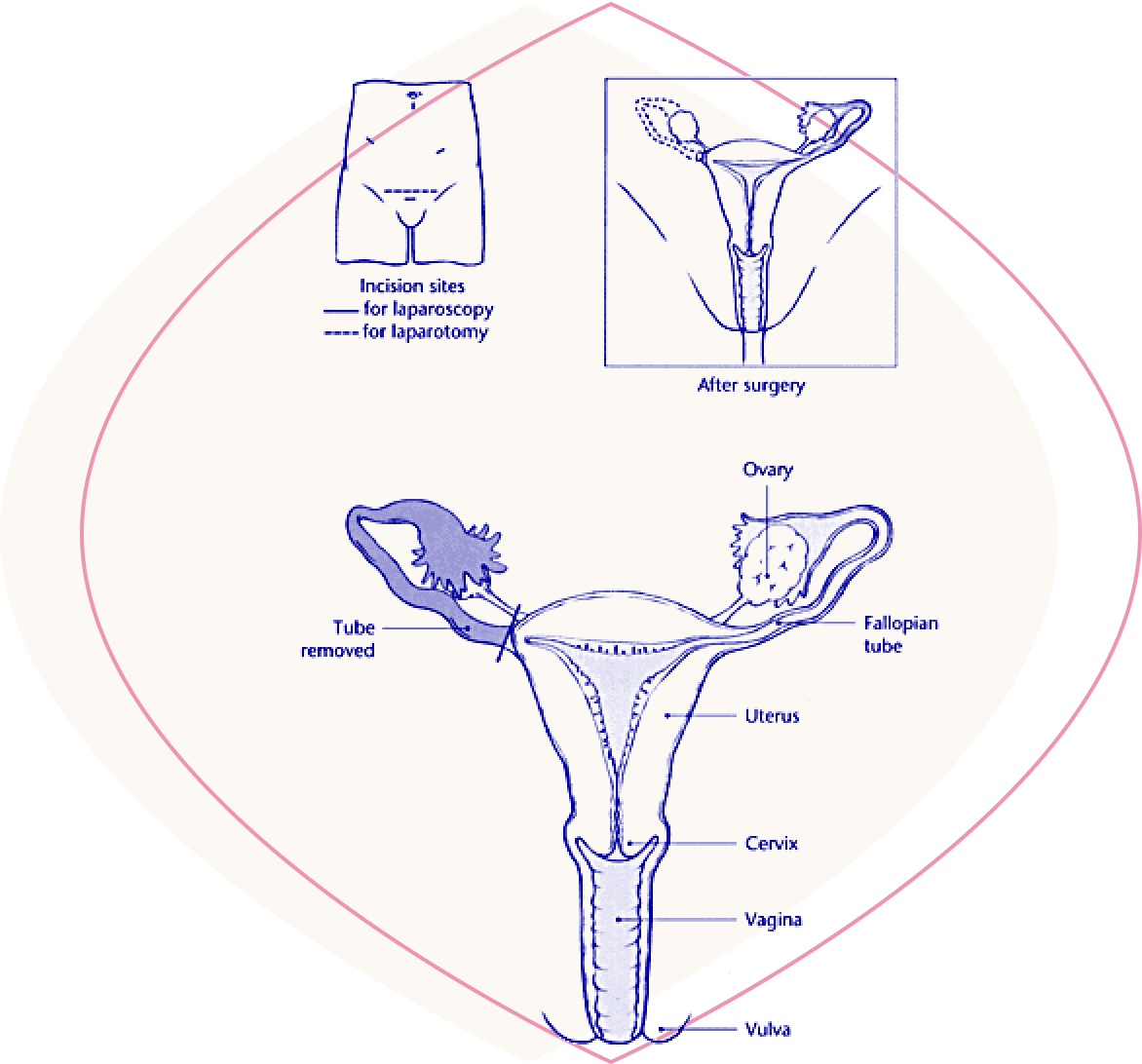
Salpingectomy is usually necessary because of
previous pelvic inflammatory disease (PID) or to remove
an ectopic pregnancy. It involves partial or total removal
of a Fallopian tube. The uterus and ovaries are left
intact.
The operation is performed under a general anaesthetic and
takes 30-60 minutes. It is sometimes performed as an
emergency.
The procedure is commonly performed laparoscopically, using
a small, fibre-optic 'telescope' which is inserted into the
abdomen through a small incision. Occasionally a
conventional operation (laparotomy) is used.
There will be some discomfort following surgery which will
be controlled with pain killers.
The average hospital stay is 1-2 days and will depend
on the type of surgery. Complete recovery should
occur within 6 weeks.
Women who have both Fallopian tubes removed will only be
able to become pregnant by in vitro fertilization (IVF).
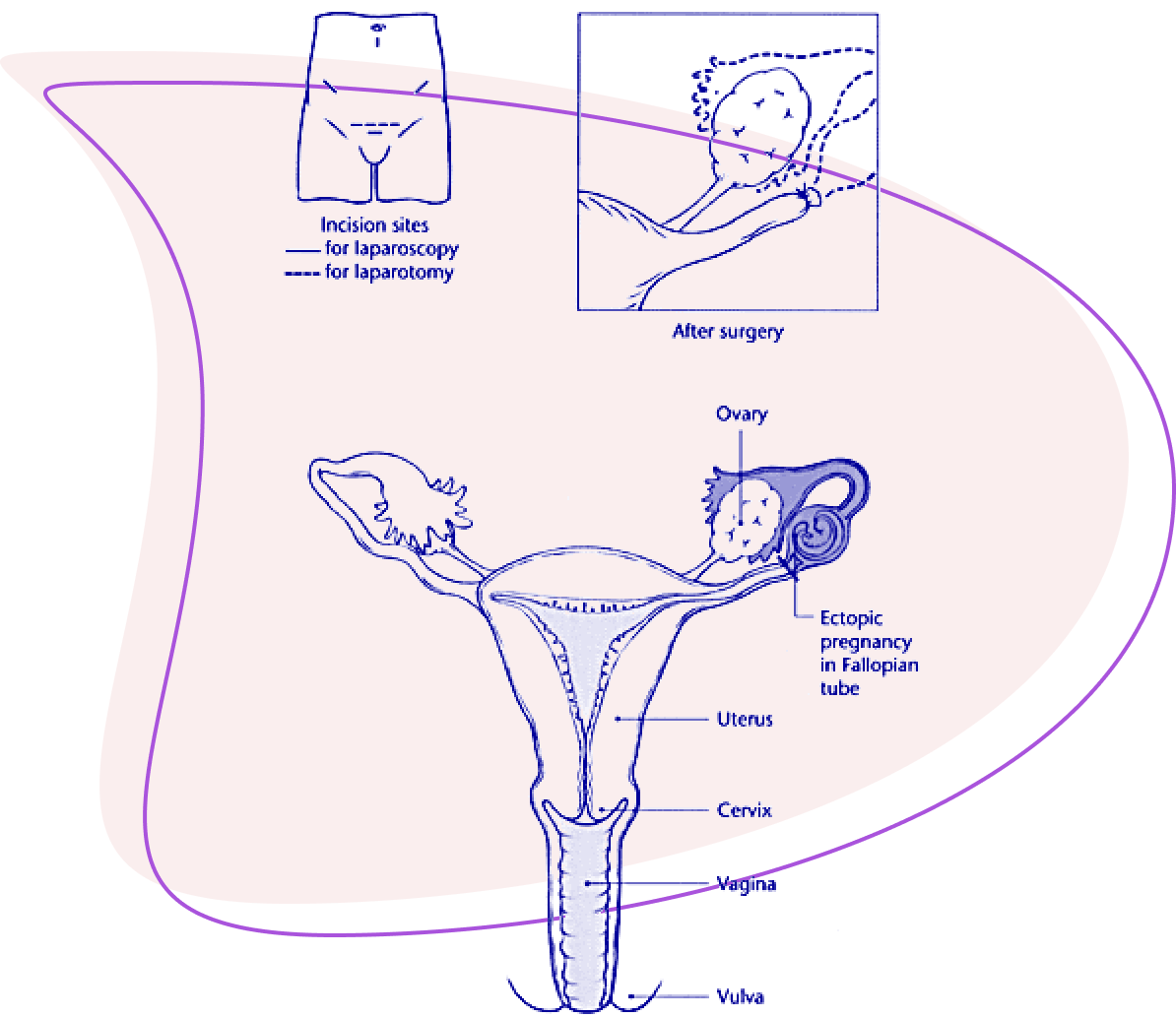
A pregnancy which occurs in the Fallopian tube is
called ectopic. This must he removed to prevent
excessive bleeding which may result if the tube ruptures.
The operation may involve removal of the tube and pregnancy
(salpingectomy), or removal of the pregnancy only (linear
salpingostomy)
The operation is performed as an emergency procedure under
a general anaesthetic and takes 30-60 minutes.
The procedure is commonly performed laparoscopically, using
a small, fibre-optic 'telescope' which is inserted into the
abdomen through a small incision. Occasionally,
a conventional operation (laparotomy) is used.
There will be some discomfort following surgery which
will be controlled with pain killers.
The average hospital stay is 1-2 days and will depend
on the type of surgery. Complete recovery should occur
within 4 weeks.