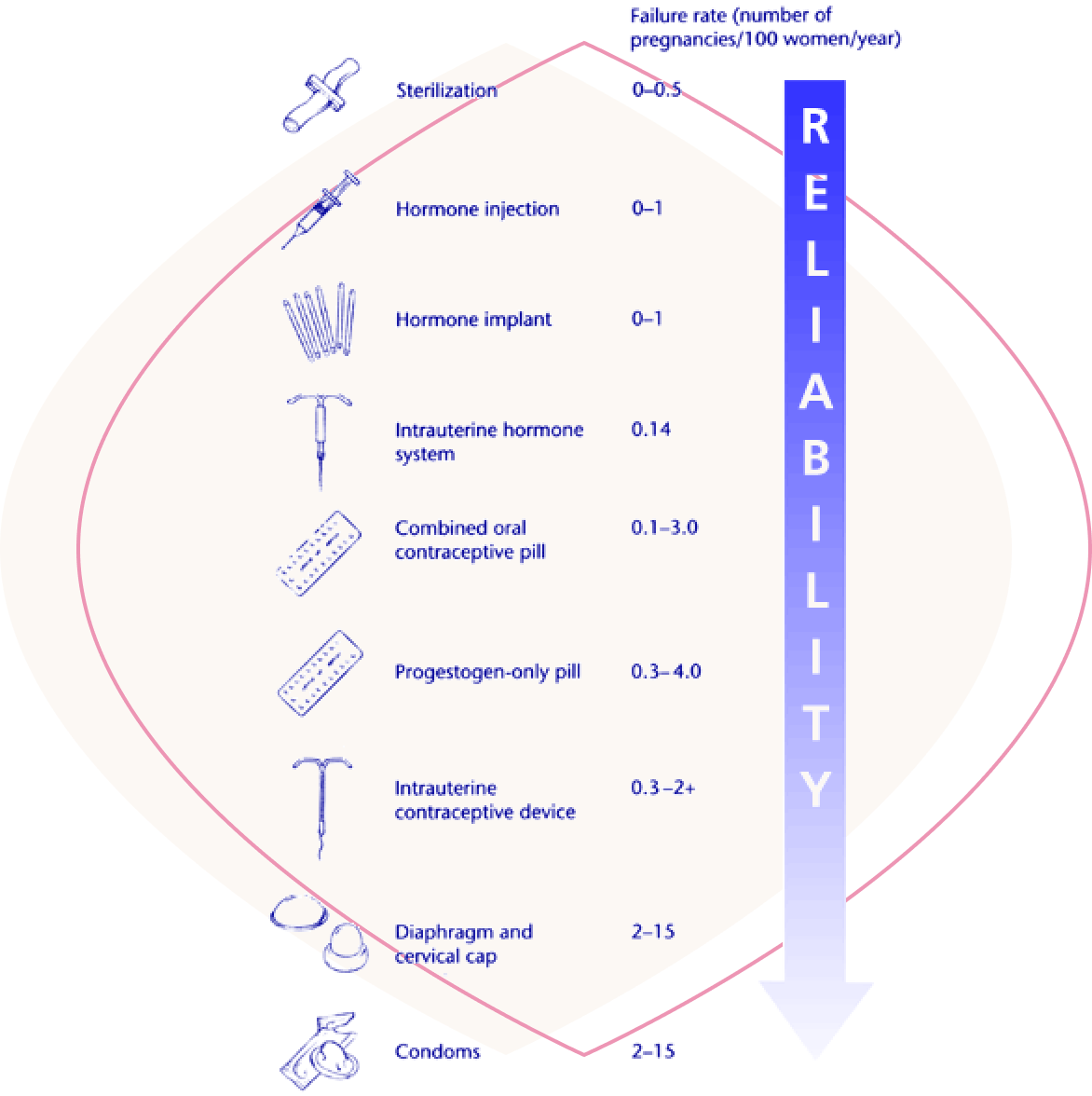
The combined oral contraceptive pill, which contains
the hormones oestrogen and progestogen, is very
effective and must be taken for 21 days, followed by a 7
day break. Occasionally, bleeding can occur mid-cycle.
The progestogen-only or 'mini-pill' is another form of
oral contraception and must be taken daily, without a
monthly break. 'Spotting' or irregular bleeding can occur.
Hormone injections contain progestogen only and
provide contraception for 12 weeks, after which time
another injection must be given.
Hormone implants contain progestogen only and are effective
for 3 years; unlike injections, implants can be removed at
any time. Bleeding, however, can be irregular.
The intrauterine contraceptive device (IUCD) or "copper
coil" is inserted at a clinic under medical
supervision. Periods can sometimes be heavier after
insertion. The device is usually replaced after 5 years.
The intrauterine system (IUS) is an
intrauterine contraceptive that contains the hormone
levonorgestrel. In addition to providing contraception, it
also helps to lighten heavy periods.It can be in place for
5 years.
The diaphragm and cervical cap are inserted before
sexual intercourse. They should both be used in conjunction
with a spermicide.
Sterilization involves an operation. This involves closing
off the tubes that carry the egg from the ovary to the
womb. This form of contraception should be considered
permanent.
The intrauterine contraceptive device (IUCD) is a
well-established and reliable form of contraception. It is more
often used by women who have had at least one vaginal
delivery, because the cervix has been dilated and therefore
insertion is easier. It is however, possible for a woman
who has had no children to use an IUCD.
The device is usually inserted immediately following a
period. The procedure can usually be carried out at a
clinic, without the need for any anaesthetic, and takes
5-10 minutes.
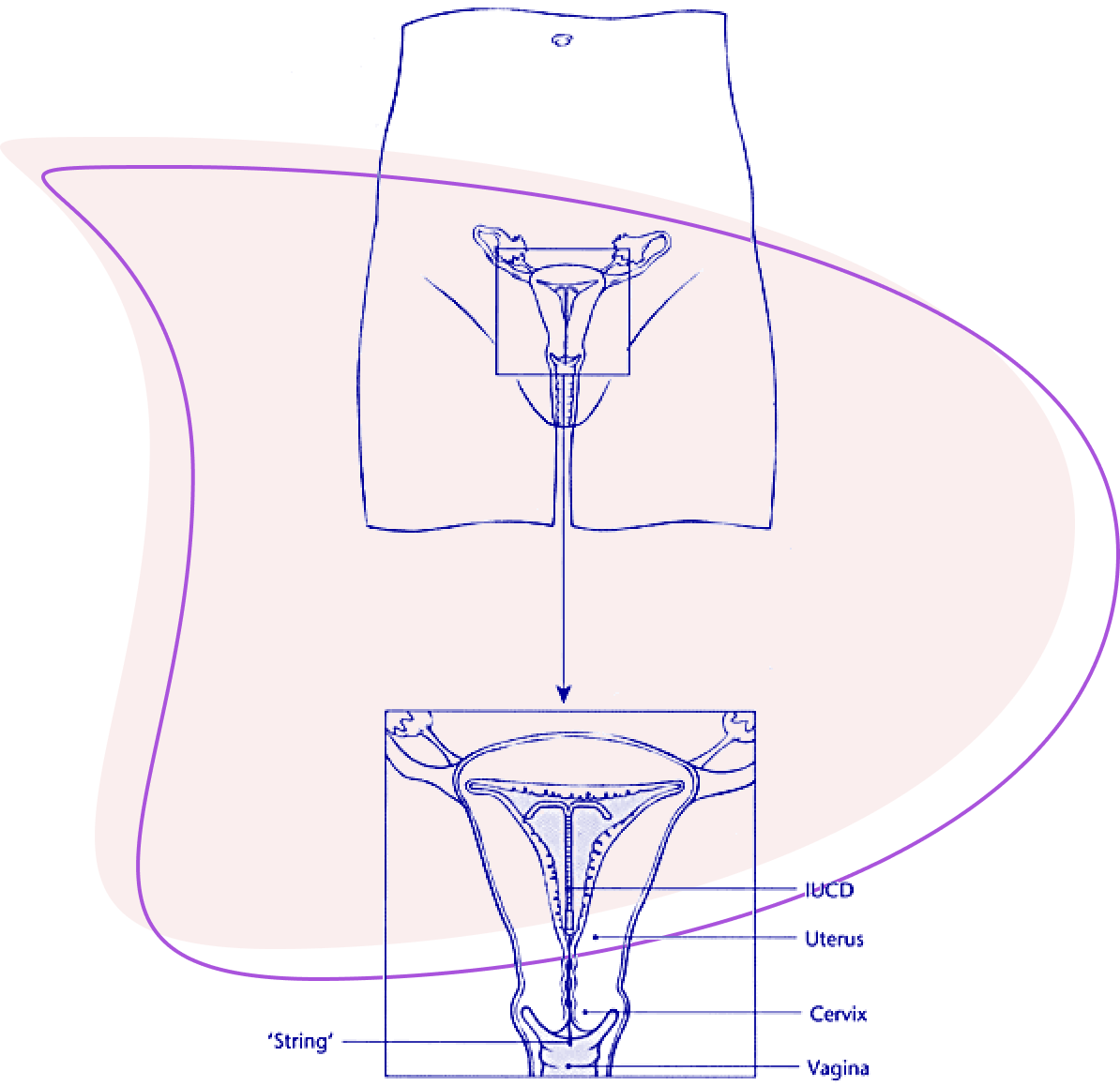
An instrument called a speculum is inserted to hold the
walls of the vagina apart. The IUCD is then placed in the
uterus using a fine plastic introducer.
A string leads from the IUCD through the cervix. This is
necessary to aid removal and to allow the woman to check that it
is still in position, though it is unlikely to be dislodged.
The IUCD can, if desired, remain in place for up to 7 years.
The IUCD has the advantages that there are no worries about
remembering to use contraception and it does not interfere with
sexual intercourse. The IUCD may, however, cause slightly
heavier periods or period pain.